The 21st-century city is undergoing a profound metamorphosis. Gone are the days when urban economic power was concentrated in sterile, isolated central business districts (CBDs) or sprawling suburban office parks accessible only by car. A new model for urban growth has emerged, one that is dynamic, collaborative, and fundamentally human-centric: the Innovation District. This is not merely a trendy urban planning term; it is a full-scale urban revolution, redefining how we live, work, and innovate in densely packed, interconnected ecosystems. These districts are becoming the powerhouses of the new economy, fostering a synergy between place, talent, and technology that is driving cities into the future.
What Exactly Are Innovation Districts?
At its core, an Innovation District is a geographic area within a city where leading-edge anchor institutions, high-growth firms, and startups coalesce and connect with supporting business incubators, accelerators, and mixed-use housing and retail. They are physical manifestations of the knowledge economy, designed to accelerate the serendipitous collisions of ideas that lead to breakthrough innovations.
Think of them as the antithesis of the traditional, compartmentalized city. Instead of separating universities from businesses, and both from residential areas, Innovation Districts intentionally mash them together. They are built on the principle that proximity fuels productivity. When a biotech researcher, a software engineer, a venture capitalist, and a student can easily meet for coffee, share ideas in a public park, or attend a seminar together, the potential for transformative collaboration multiplies exponentially.
The Three Core Models of Innovation Districts
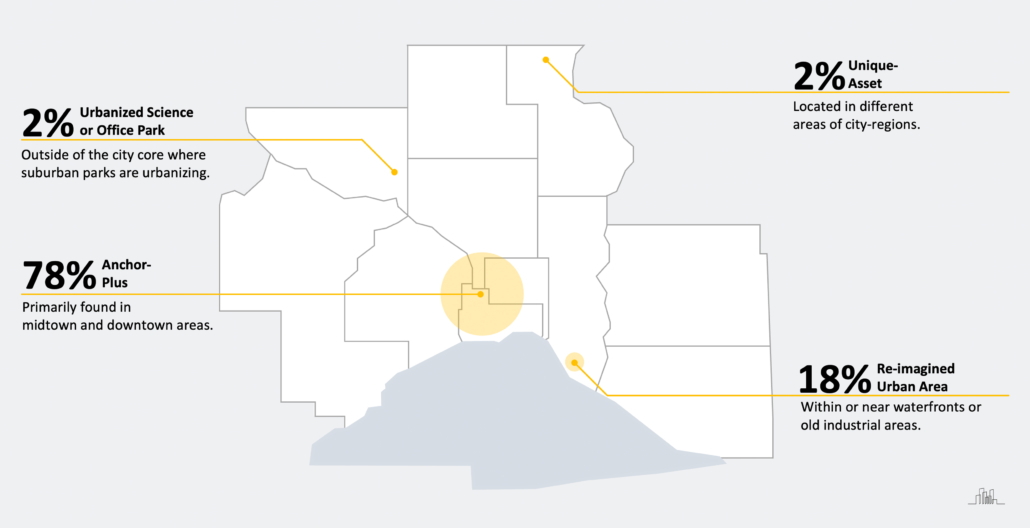
While each district is unique, they generally fall into one of three primary models, often blending elements of each:
A. The Anchor-Plus Model: This is perhaps the most common model. It revolves around a major, place-based institution like a leading research university, a medical hospital, or a research facility that acts as the primary economic and intellectual anchor. The district then develops around this core, with spin-off companies, tech transfer offices, and private sector R&D facilities clustering nearby to leverage the talent and research flowing from the anchor. A prime example is Kendall Square in Cambridge, Massachusetts, which evolved from a neglected industrial area into a global biotech epicenter precisely because of its proximity to the Massachusetts Institute of Technology (MIT).
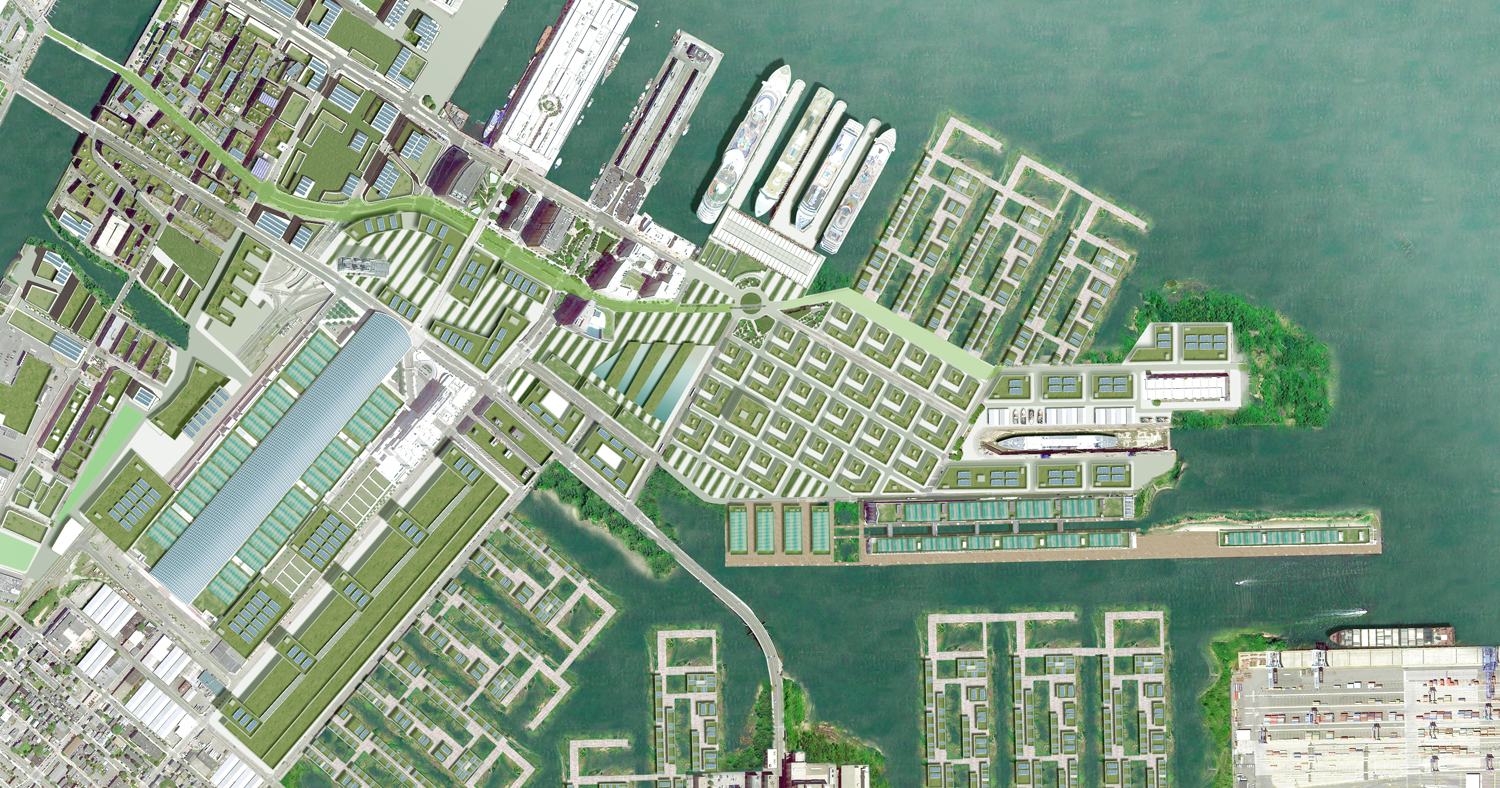
B. The Reimagined Urban Area Model: This model involves the transformation of underutilized urban spaces, often historic industrial or port areas with robust infrastructure and character-rich buildings. The strategy here is to leverage the existing urban fabric the old warehouses, factories, and railway lines and repurpose them for 21st-century use. This creates a potent blend of historic charm and cutting-edge technology. The 22@Barcelona project in Spain is a textbook case, turning a decaying industrial zone into a vibrant technological and innovation ecosystem while preserving its cultural heritage.
C. The Urbanized Science Park Model: This model takes the traditional, car-dependent suburban science park and retrofits it for urban living. These districts are typically found on the edges of cities and are characterized by master-planned developments that introduce dense, walkable streets, retail amenities, and residential units to what was once a single-use office environment. The goal is to inject the energy and connectivity of a city into a previously isolated area. Research Triangle Park (RTP) in North Carolina is a famous example that is actively pursuing this urbanizing transformation to remain competitive.
The Key Ingredients for a Successful Innovation District
Building a thriving Innovation District is not about simply designating a zone and hoping innovators will come. It requires a deliberate and integrated strategy focusing on several critical components:
A. Economic Assets: This is the fundamental engine. It includes the cluster of firms, institutions, and organizations that drive the district’s economic vitality. This encompasses research universities, medical centers, large corporate headquarters, startups, incubators (which provide nurturing environments for young companies), and accelerators (which offer intensive, rapid-growth programs).
B. Physical Assets: This refers to the built environment and its design. Successful districts prioritize:
-
Walkability and Bikeability: Reducing reliance on cars and encouraging foot traffic.
-
Mixed-Use Development: Seamlessly integrating office space, labs, apartments, hotels, restaurants, and retail shops.
-
Public Spaces: Creating high-quality parks, plazas, and squares that act as the “living room” for the community, fostering unplanned interactions.
-
Transportation Connectivity: Excellent access to public transit (trains, buses, trams) is non-negotiable.
-
Digital Infrastructure: Ubiquitous, high-speed broadband and open data policies are the invisible utilities of the modern economy.
C. Networking Assets: These are the social components that build a community, not just a place of work. This includes:
-
Cultural and Social Offerings: Museums, art galleries, concert venues, and gyms that enhance quality of life.
-
Professional Networking Organizations: Formal and informal groups that facilitate connections between people.
-
Programmed Events: Meetups, hackathons, conferences, and workshops that regularly bring people together around shared interests.
D. Leadership and Collaboration: Perhaps the most crucial ingredient. No single entity can build a district alone. It requires a collaborative governance model involving city government, anchor institutions, private sector leaders, philanthropists, and community representatives. This “quadruple helix” model of collaboration ensures alignment and shared purpose.
The Multifaceted Benefits: Why Cities Are Betting Big
The investment in Innovation Districts yields significant returns for cities, businesses, and residents alike.
A. Supercharged Economic Growth: They are powerful job creators. By concentrating talent and resources, they attract investment, launch new companies, and increase patent production. They become export hubs, creating products and services sold globally, which brings new wealth into the city.
B. Enhanced Talent Retention and Attraction: The brightest minds in science, technology, and creative fields are drawn to these vibrant, dynamic environments. They offer a density of opportunity and a lifestyle that suburban offices cannot match, helping cities retain graduates and attract global talent.
C. Increased Urban Sustainability: By promoting dense, transit-oriented, walkable development, Innovation Districts are inherently more sustainable than suburban sprawl. They reduce carbon emissions from commuting, promote more efficient energy use through shared infrastructure, and often incorporate green building standards.
D. Inclusive Growth and Equity Challenges: This is both a benefit and a critical challenge. When done correctly, Innovation Districts can create pathways for inclusive prosperity by connecting local residents to new job opportunities through targeted workforce training programs, supporting minority-owned businesses, and ensuring affordable housing is part of the development mix to prevent displacement. However, without intentional policies, they can accelerate gentrification and widen inequality, making a focus on equity not just an ethical imperative but an economic one for long-term stability.
Notable Global Case Studies
A. Kendall Square, Cambridge, USA: The “most innovative square mile on the planet.” Its success is directly tied to MIT. The university’s proactive strategy of leasing land rather than selling it, coupled with a focus on ground-floor activations and creating public spaces, transformed it into a world-leading hub for biotech and technology.
B. Station F, Paris, France: Housed in a historic former railway depot, Station F is the world’s largest startup campus. It’s a quintessential example of the “Reimagined Urban Area” model. It operates as a single, massive ecosystem under one roof, hosting thousands of entrepreneurs, venture capitalists, and corporate programs, all a short walk from the city center.
C. Torre Norte, Medellín, Colombia: Once notorious for violence, Medellín has used innovation as a tool for social urbanism. The Torre Norte project is part of a larger strategy to create an innovation corridor, using public transportation (like its iconic cable cars) to connect low-income neighborhoods to economic opportunities in the city center, demonstrating a profound commitment to inclusive growth.
The Future of Innovation Districts
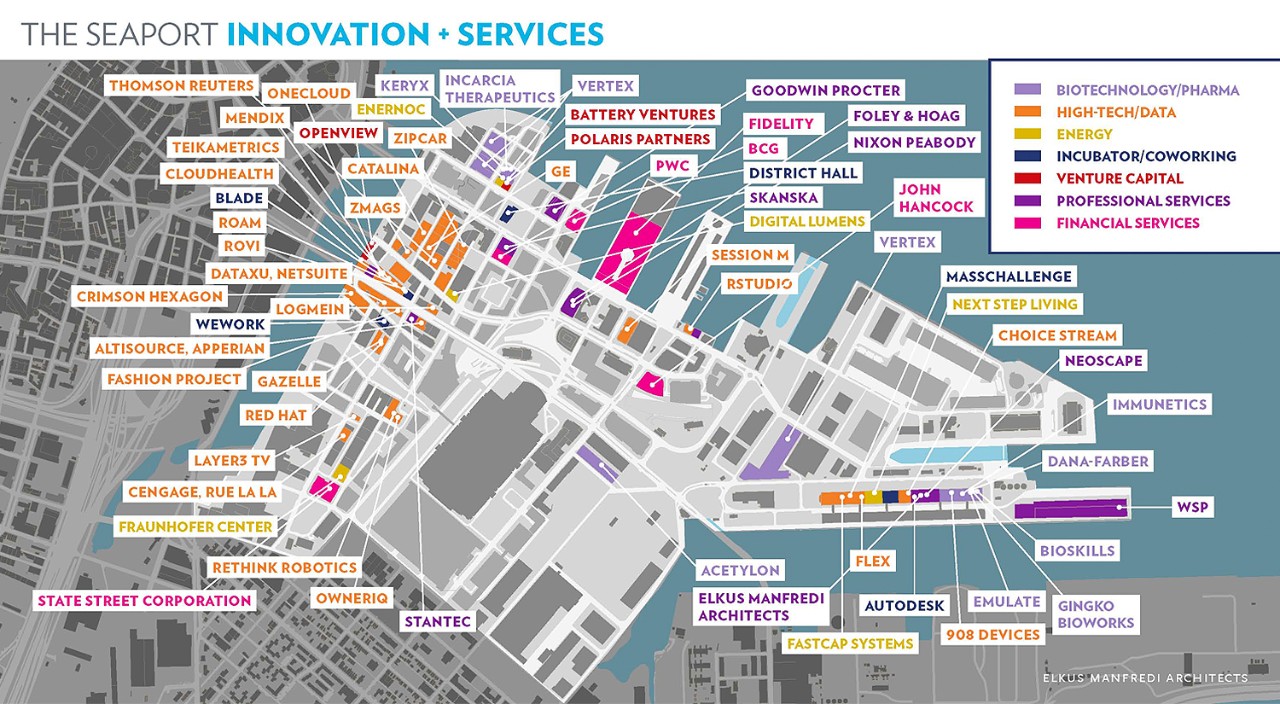
The evolution of these districts is ongoing. Key trends shaping their future include:
A. The Hybrid Work Revolution: The post-pandemic shift to remote and hybrid work has forced a re-evaluation of the office. Innovation Districts must now offer compelling reasons to be physically present. This will place an even greater emphasis on unparalleled collaboration spaces, exceptional amenities, and unique experiences that cannot be replicated on a Zoom call.
B. The “15-Minute City” Integration: The concept of the 15-minute city, where all essential services are within a quarter-hour walk or bike ride, dovetails perfectly with the principles of Innovation Districts. Future districts will be designed as complete, self-sufficient neighborhoods, not just employment centers.
C. Climate Resilience and Green Tech: Districts will increasingly be designed as testbeds for green technology, featuring net-zero energy buildings, circular waste systems, and climate-resilient infrastructure. They will become living labs for sustainable urban solutions.
D. Hyper-Specialization: While early districts were often general tech hubs, future ones may become hyper-specialized in specific fields like artificial intelligence, climate tech, or ocean sciences, leveraging a city’s unique existing strengths and anchors.
Conclusion: The Blueprint for Tomorrow’s City
Innovation Districts represent a fundamental shift in urban planning and economic development strategy. They move beyond the outdated separation of uses and embrace the chaotic, creative energy of integrated, mixed-use, human-scale environments. They are not a silver bullet for all urban challenges, and their potential to create inequality must be vigilantly addressed. However, by intentionally fostering collaboration between the public, private, and educational sectors, and by prioritizing placemaking, connectivity, and inclusivity, cities can harness the power of these districts. They are more than just a trend; they are the blueprint for building resilient, dynamic, and prosperous 21st-century urban economies where ideas can meet, mingle, and manifest into a better future for all.