In the relentless pursuit of competitive advantage, a new breed of technological powerhouse has emerged, fundamentally altering how organizations conceive, develop, and launch groundbreaking ideas. These are not mere tools; they are dynamic ecosystems powered by artificial intelligence. AI-powered innovation platforms are no longer a futuristic concept they are the present-day engines of progress, dominating boardroom discussions and strategic roadmaps across the globe. This comprehensive guide delves into how these platforms are reshaping the landscape of business innovation, why they have become indispensable, and how your organization can leverage them to not just compete, but to lead.
Understanding the Core: What Are AI-Powered Innovation Platforms?
At its simplest, an AI-powered innovation platform is a centralized digital environment that leverages artificial intelligence including machine learning (ML), natural language processing (NLP), and predictive analytics to augment and accelerate the entire innovation lifecycle. Unlike traditional methods that rely heavily on human intuition and manual processes, these platforms systemize serendipity. They provide the computational muscle and data-driven intelligence to identify opportunities, solve complex problems, and predict outcomes with unprecedented accuracy.
Think of it as the difference between navigating a vast ocean with a paper map versus using a state-of-the-art GPS system that accounts for real-time weather, currents, and maritime traffic. The former requires experience and guesswork; the latter provides a data-optimized, efficient, and safe route to the destination. These platforms are that GPS for corporate strategy and R&D.
The Driving Forces: Why AI Platforms Now Dominate
The dominance of AI innovation platforms isn’t accidental. It’s a convergence of critical market pressures and technological maturation.
A. Exponential Data Growth: The world is drowning in data from customer interactions, IoT sensors, market reports, and scientific research. Humans alone cannot process this volume of information to extract meaningful patterns. AI thrives on it, turning vast datasets into actionable intelligence.
B. Unprecedented Computational Power: Cloud computing and advanced processing units (like GPUs and TPUs) have made the immense computational resources required for complex AI algorithms accessible and affordable to businesses of all sizes.
C. The Need for Speed and Agility: In a world where market dynamics can shift overnight, the speed of innovation is a primary competitive differentiator. Companies can no longer afford multi-year development cycles. AI platforms drastically compress these timelines.
D. The Complexity of Modern Problems: Challenges like climate change, supply chain resilience, and personalized medicine are too complex for siloed teams. AI platforms facilitate cross-disciplinary collaboration and can model countless scenarios to find optimal solutions.
Deconstructing Dominance: Key Capabilities of AI Innovation Platforms
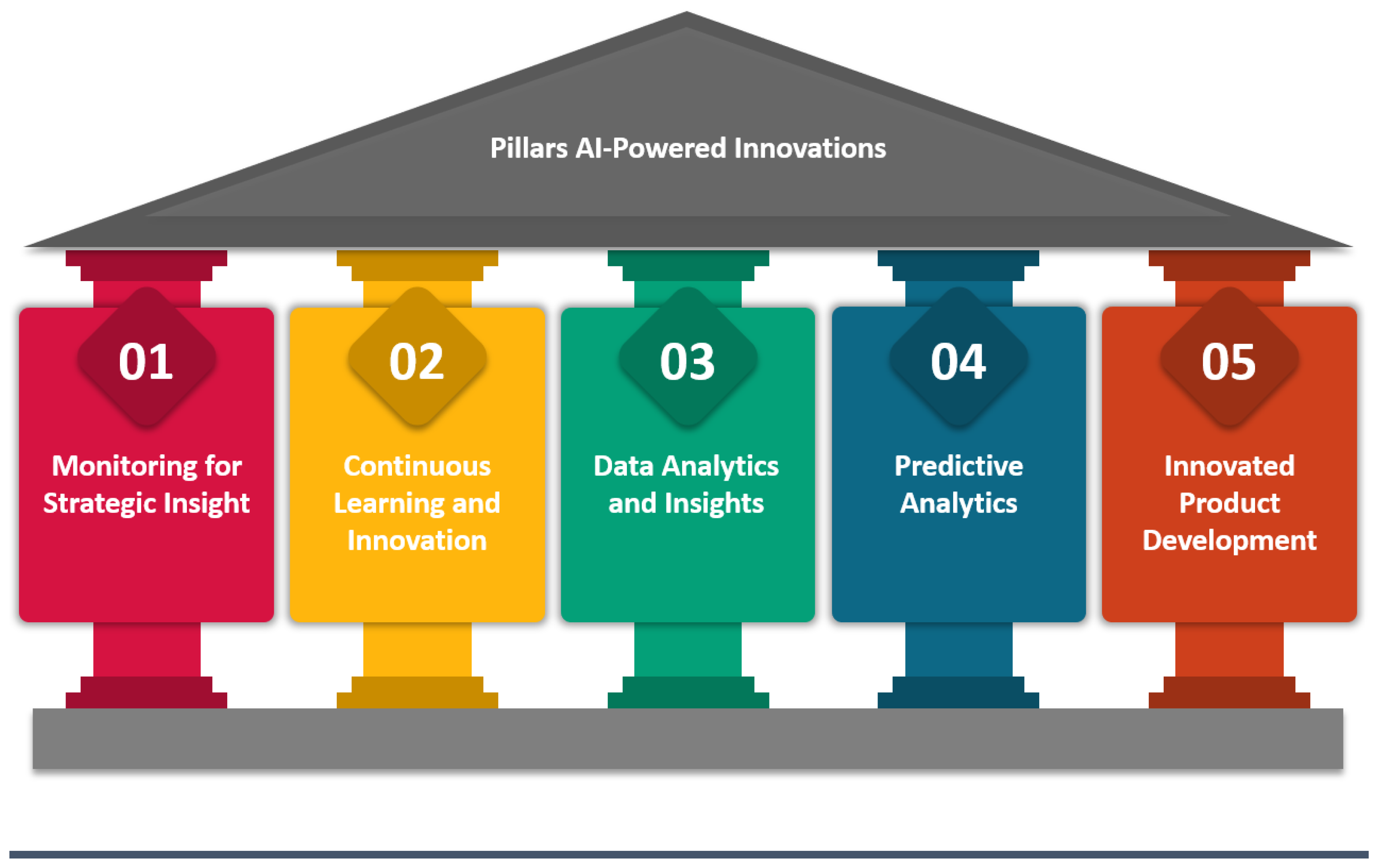
The supremacy of these platforms is rooted in a suite of powerful, interconnected capabilities that work in concert to empower innovators.
A. Idea Generation and Augmentation: Moving beyond simple brainstorming, AI can analyze global patent databases, scientific publications, news trends, and consumer sentiment to identify unmet needs, white-space opportunities, and emerging trends. It can suggest novel combinations of existing technologies or propose solutions to technical problems formulated by users.
B. Predictive Market Analysis and Trend Forecasting: By continuously scanning a myriad of data sources, AI models can predict which innovations are likely to succeed, what features customers will value most, and how a market might evolve. This de-risks investment and allows companies to pivot resources toward the most promising initiatives.
C. Accelerated Research and Development (R&D): In fields like pharmaceuticals, materials science, and chemistry, AI can predict molecular interactions, simulate experiments in silico (in computer models), and identify promising candidate molecules for further testing. This can reduce years of lab work into days or weeks, saving billions of dollars.
D. Enhanced Collaboration and Crowdsourcing: These platforms break down organizational silos. They can connect internal experts from different departments and even tap into external networks of innovators, scientists, and freelancers. AI intelligently matches problems with the individuals or teams most likely to solve them, anywhere in the world.
E. Optimization of Operations and Supply Chains: Innovation isn’t just about new products; it’s also about innovating processes. AI platforms can model entire production lines and supply networks to identify bottlenecks, predict maintenance needs, and optimize for cost, speed, and sustainability.
F. Intellectual Property (IP) Strategy and Management: AI tools can conduct comprehensive prior-art searches to assess the novelty of an invention, help draft patent claims, and monitor the competitive landscape for potential infringements or partnership opportunities.
Tangible Impact: How Industries Are Being Transformed
The application of AI-powered platforms is creating seismic shifts across diverse sectors.
-
Healthcare and Life Sciences: Companies like Pfizer and Moderna leveraged AI and big data to accelerate COVID-19 vaccine development. AI platforms are now used to discover new drugs for rare diseases, personalize cancer treatment plans, and streamline clinical trials.
-
Manufacturing and Industrial Design: Siemens and GE use digital twins virtual replicas of physical systems powered by AI to simulate product performance under extreme conditions, optimize factory floor operations, and predict equipment failures before they happen.
-
Consumer Goods and Retail: Companies like Procter & Gamble and Unilever use AI to analyze social media and sales data to predict the next big consumer trend, formulate new products, and design marketing campaigns that resonate with target demographics.
-
Financial Services: Banks and fintech firms use AI innovation platforms to develop new financial products, enhance fraud detection algorithms, automate risk assessment, and personalize customer wealth management advice.
-
Agriculture: From analyzing satellite imagery to monitor crop health to developing climate-resilient seeds, AI is driving innovation to feed a growing global population sustainably.
Implementing for Success: A Strategic Roadmap
Adopting an AI innovation platform is a strategic journey, not just a software installation.
A. Define Clear Objectives and KPIs: Begin by identifying your core innovation challenges. Are you aiming to accelerate product development, improve operational efficiency, or enter new markets? Establish clear Key Performance Indicators (KPIs) to measure success, such as time-to-market reduction, R&D cost savings, or revenue from new products.
B. Secure Executive Sponsorship and Cultural Buy-in: The most advanced platform will fail without leadership support and a culture that embraces data-driven decision-making. Foster an environment where experimentation is encouraged, and failure is viewed as a learning step.
C. Assess and Prepare Your Data: AI runs on data. Audit your existing data assets for quality, accessibility, and structure. A data strategy that ensures clean, well-organized, and ethical data sourcing is a prerequisite for success.
D. Choose the Right Platform Partner: Not all platforms are created equal. Some are industry-specific, while others are more general. Evaluate vendors based on their technology stack, security protocols, scalability, and most importantly, their ability to understand and solve your specific business problems.
E. Start with a Pilot Program: Don’t attempt a full-scale rollout immediately. Select a high-value, well-defined project for a pilot. This allows you to demonstrate quick wins, build momentum, and work out any implementation kinks on a smaller scale.
F. Focus on Change Management and Training: Provide comprehensive training for all users. Help your teams understand how to work alongside the AI, interpreting its suggestions and integrating its insights into their workflows effectively.
Navigating the Challenges and Ethical Considerations
Despite their potential, the path to AI-driven innovation is not without hurdles.
-
Data Privacy and Security: Handling vast amounts of proprietary and sometimes personal data requires robust cybersecurity measures and strict adherence to regulations like GDPR and CCPA.
-
Algorithmic Bias: AI models are trained on data created by humans, which can contain inherent biases. Vigilant auditing is required to ensure that AI-driven decisions are fair and equitable and do not perpetuate existing biases.
-
The Human Factor: The goal is augmentation, not replacement. The most successful implementations combine human creativity, strategic thinking, and ethical judgment with AI’s computational power. Managing this human-AI collaboration is key.
-
Integration with Legacy Systems: Many large enterprises have outdated IT infrastructure. Integrating modern AI platforms with these legacy systems can be a significant technical and financial challenge.
The Future Horizon: What’s Next for AI Innovation?
The evolution of these platforms is continuing at a breakneck pace. We are moving towards:
-
Generative AI for Invention: Beyond analyzing data, generative AI models can now create entirely new original content—from designing novel protein structures and material compositions to drafting technical blueprints and writing software code.
-
The Emergence of Autonomous Innovation: The next step could be systems that not only suggest ideas but also autonomously test, iterate, and refine them in simulation environments, presenting a shortlist of validated solutions to human managers.
-
Democratization of Innovation: As these platforms become more user-friendly and accessible, they will empower smaller businesses and even individual entrepreneurs to innovate at a scale previously reserved for corporate giants.
Conclusion
The domination of AI-powered innovation platforms marks a paradigm shift in the fundamental mechanics of progress. They have transitioned from a competitive edge to a core component of modern business strategy. Organizations that embrace these platforms are equipping themselves to navigate the complexities of the 21st century, turning unprecedented challenges into extraordinary opportunities. The question is no longer if you should adopt this technology, but how quickly you can integrate it into your innovation DNA to build a smarter, more agile, and more successful future.